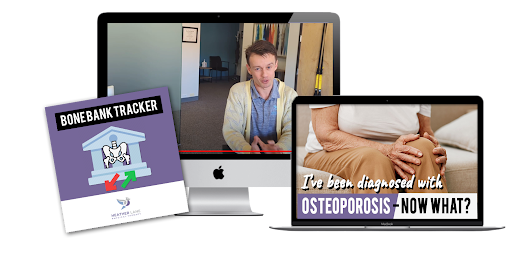
You're doing the right things. The system isn't
May 21, 2026The check engine light goes off in the back of your head. You're doing all the right things — jogging, tennis, you even have a regular yoga practice. You don't feel old, but since you took a month off, that downdog has been barking back, your footwork on the court unfamiliar. The system you’d turn to for help has its foot on both the brake and the accelerator. It goes nowhere fast—right when you’re trying to get back to action on your aging process.
Aging doesn't have to be a slow fade into frailty — it's a series of transitions between loss and growth. Muscle loss is real. Growth is, too. The only question is who gets to drive - you or the system. And here's what the medical system doesn’t measure: posture, reaction time, spinal mobility. The things that determine whether you’ve lost a step — not diagnostic MRI results or blood labs - factors that actually keep you active and doing what you love.
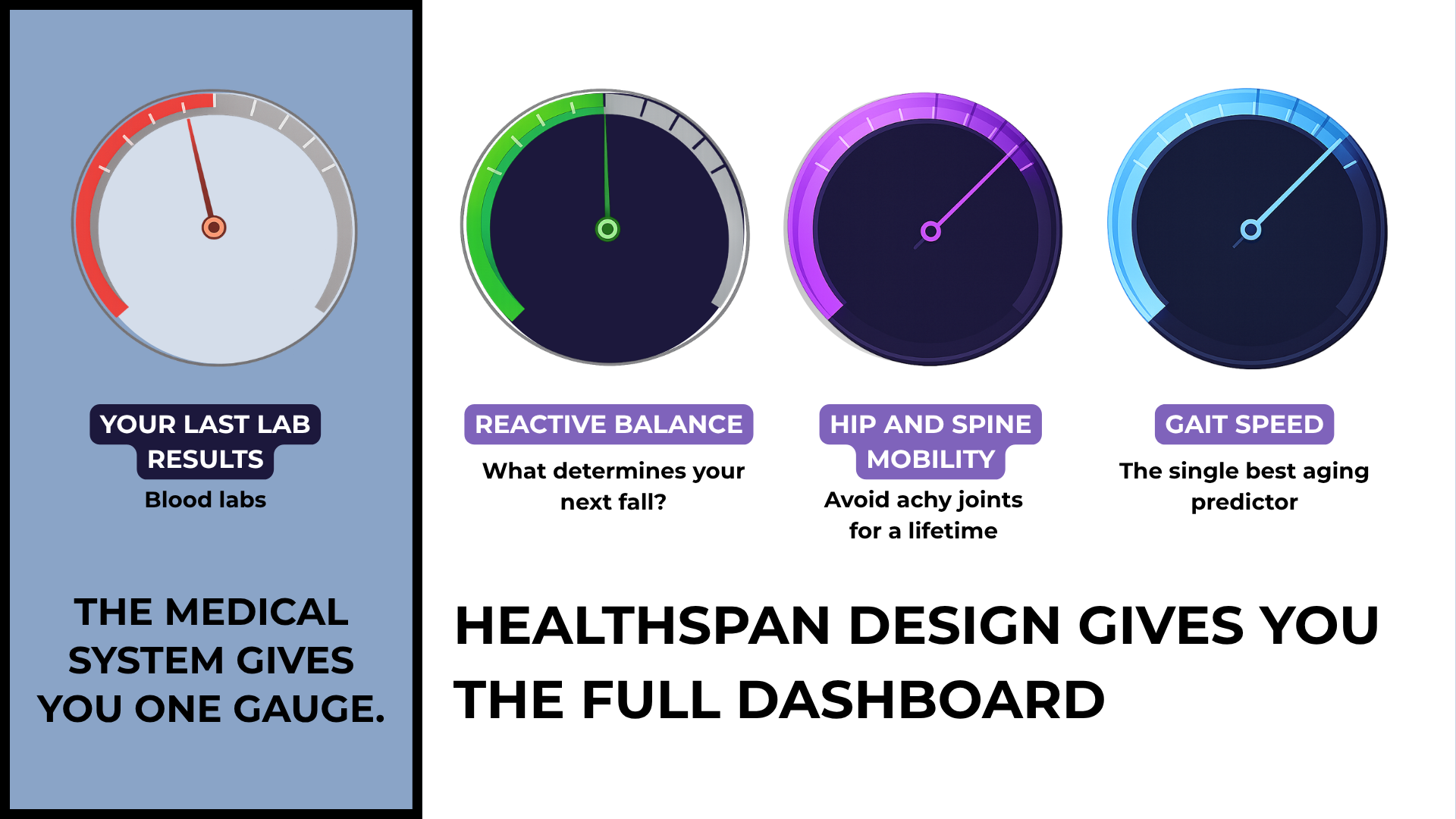
"You can wait for someone to hand you a map, or you can start reading the terrain yourself."
Nancy found this out with her bone-loss diagnosis after a scan: “Will i still be able to play tennis?” She used to own the net. First to the drop shot, a strong overhead, never thinking twice about her footing. With this new diagnosis, her doctor presses on the brake, “be careful with tennis.”
At her next practice, she thinks twice before a sprint to the net. Not because her game changed — because she started wondering if her body would answer under this new clinical finding - low bone mass.
That hesitation? That's the real fracture. The medical system fixates on an a bone density score, with the first suggestion is - you guessed it - medication. "We'll try this for two years, then re-evaluate," her doctor says.
But the real measurement — at least in Healthspan Design — is avoiding fractures. This has nothing to do with ‘strong’ or ‘weak’ bone. Fractures are a movement problem. Nancy doesn't need the world's strongest bones. She needs the quickness to get to that drop shot and still win the point. She needs to backpedal confidently for her famous overhead smash. She needs to win the match.
For too long, Nancy has been a passenger in her own care plan. Her doctor tracks her bone density for two years, “let’s try monthly injections next”.
Nobody tracks her gait speed, her reaction time, or whether she can recover her balance after a stumble. She gets the medication — but not the individualized balance training that meets her where she is. That brake stays on. She walks out of every appointment with a prescription and a void.
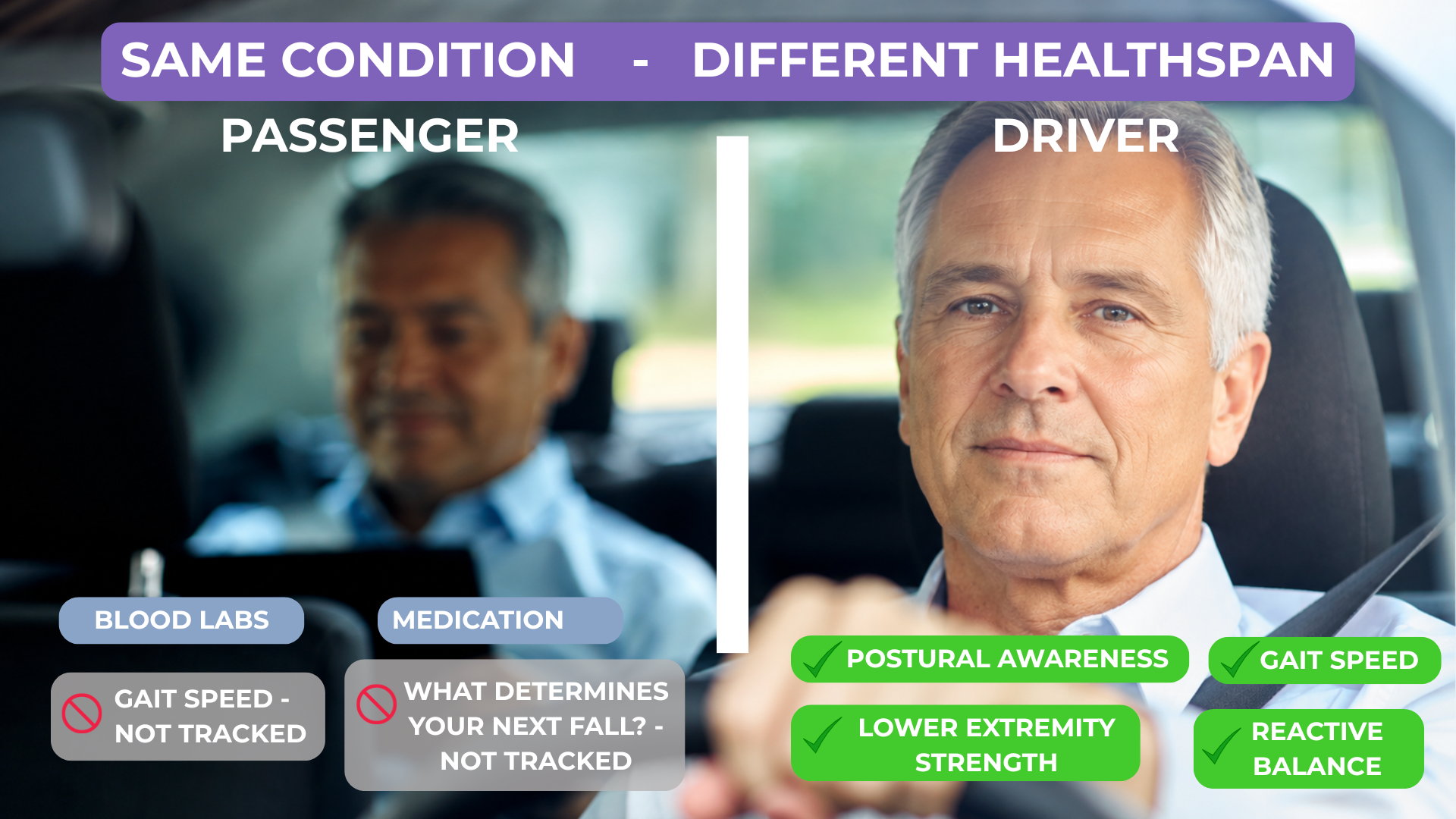
When you move from passenger to driver, you practice Healthspan Design.
You gain more than you lose.
You become the 80-year still playing tennis with her grandchild, not just another "post-menopausal woman with low bone mass" — you have a match to win.
When you see aging as a design problem, you stop waiting for a traumatic event - a fall, a scan, an injury - to take action. You start building your own map and making decisions that support your active life - whatever it takes. You take the bone medication and do the high-level balance work. You take your foot off the brake. That check engine light isn't a signal to pull over. It's a signal that you can either get in the driver’s seat or let the system drive for you.