Simple + Simple = Complicated
May 21, 2026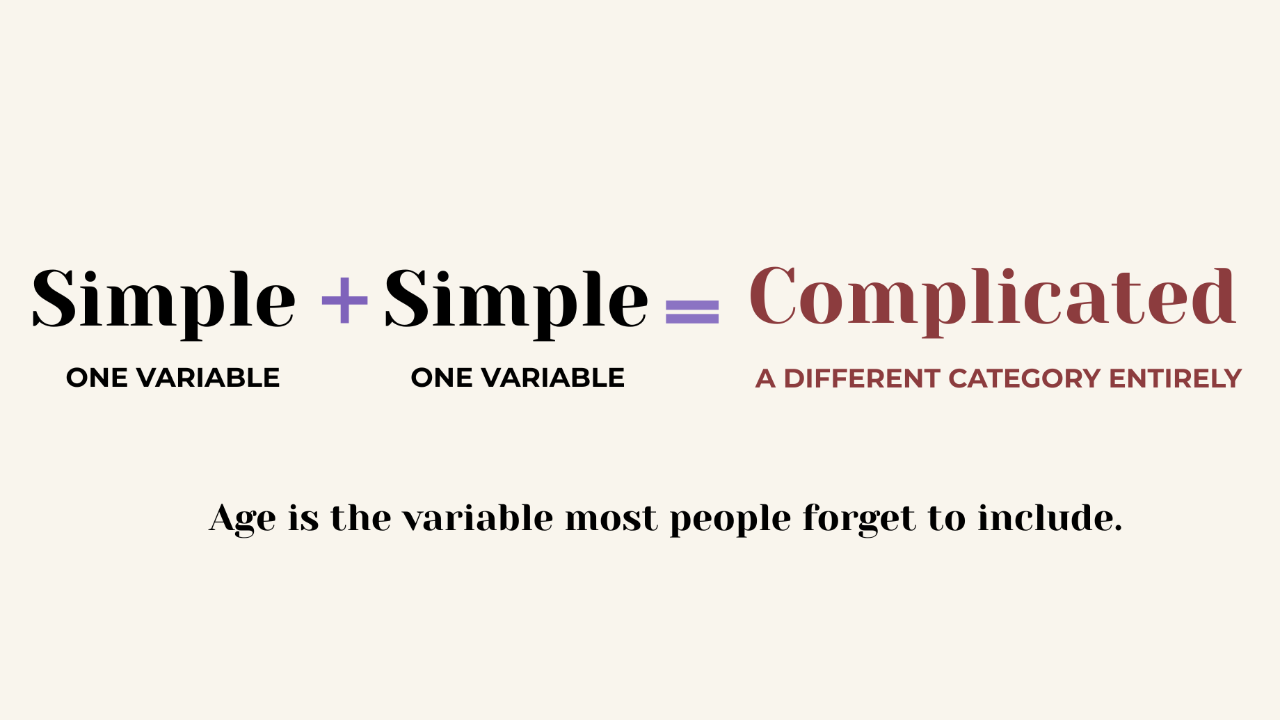
"This isn't addition. When simple things combine, they don't get harder — they become something different."
You don't need more information about aging.
You need a better map. Because simple things—running, hiking, climbing stairs—are no longer simple after knee surgeries, injuries, and fear set in. All these variables complicate the run.
"Four categories of complexity. Each one requires a different set of navigation skills."
Osteoblasts lay down bone. That's simple. Bone remodeling—factoring in medications, density changes—is complicated. With osteoporosis and aging you've crossed into a different category of complexity entirely.
But this isn't just the story of bone health.
It's about what happens to any familiar input the moment time gets involved.
Running is simple. Left foot, right foot, propel forward.
Running in your current body is complicated.
Not because your legs forgot how. Because every mile now asks more from you than it used to: How's your achy hip holding up? Are you stressing your heart in a positive way? Are your tendons staying spongy or do you need to add in focused strength training?
What was once a simple activity is now several things at once.
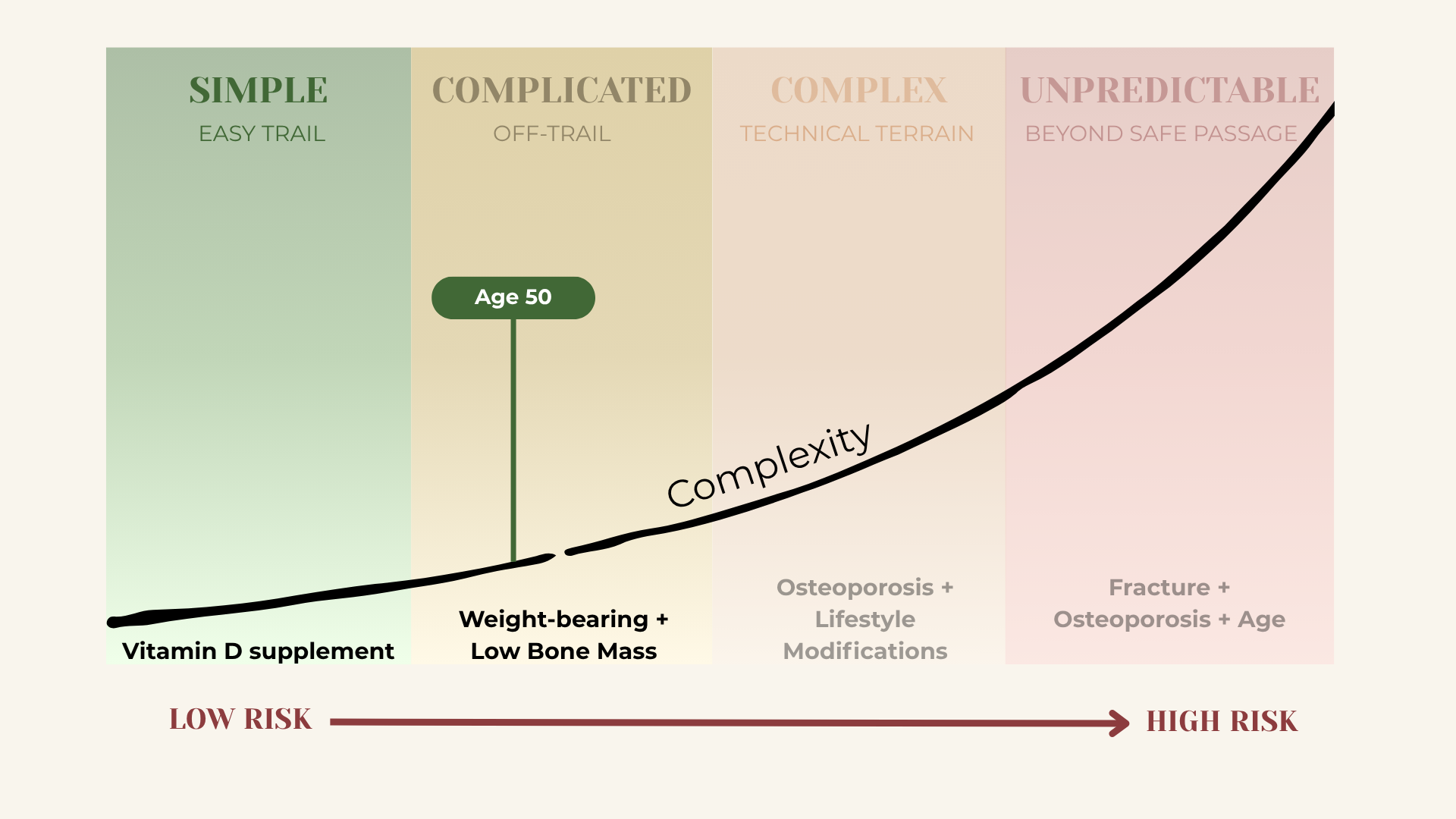
"At 60, weight-bearing exercise and bone basics were manageable alone. Technical terrain — but you could manage it yourself to make improvements."
Hiking + age = complicated.
Not the trail. The single-leg landing on descent, the hip loading, the next morning.
Sleep + age = complicated.
Not the act of closing your eyes. The hormonal architecture underneath it, the quality of deep sleep, the way training load and recovery have started negotiating with each other without asking you first.
Strength training + age = complicated.
Not the movement. The stimulus-to-response curve has changed. Your body is slower to rebuild than it used to be—not broken, just operating on a longer timeline that most training plans aren't written for.
Same inputs. Different body. Different outcomes.
This is what I mean when I say that living in an aging body doesn't make you an expert in one.
Experience tells you what you used to be able to do. Expertise tells you what's actually changed—and why the same effort no longer produces the same result.
That gap is where most people get stuck. Doing the right things. Not seeing the returns. Quietly adjusting—shorter runs, easier hikes, skipping the days that used to be fine.
Not because they're giving up. Because the map they're using is outdated.
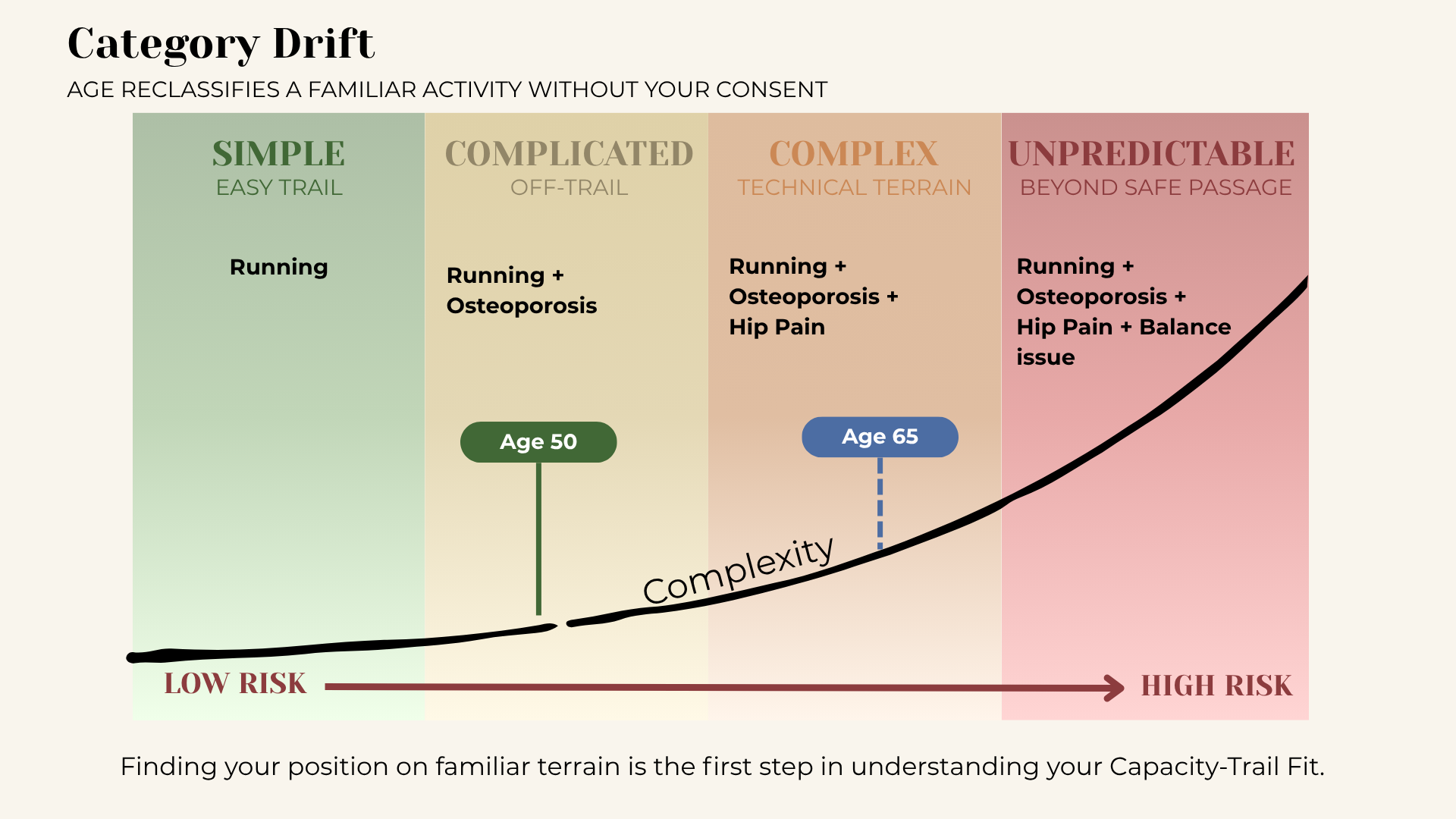
"Age changes the category — not just the difficulty. The trail didn't change. Your position on the trail did."
Running used to be simple. Left foot, right foot — you knew where you stood on that terrain. At 50, it was technical but readable. You could manage the signals.
At 65, the same run sits at a different category entirely. Not because the miles got longer. Because the variables underneath multiplied — load tolerance, tissue recovery, cardiac demand, joint negotiation — until the familiar trail required a different kind of navigation. A guide, not just a plan.
Hold Your Ground isn't about doing more.
It's about understanding what you're working with—so the effort you put in actually goes somewhere.
Knowing which input is driving which outcome in your body right now. Knowing what's changed and what hasn't. Knowing whether the equation you're using still holds.
That's not fitness. That's Healthspan Design.
The faster you run, the slower you age. But only if you understand what you're running on.